
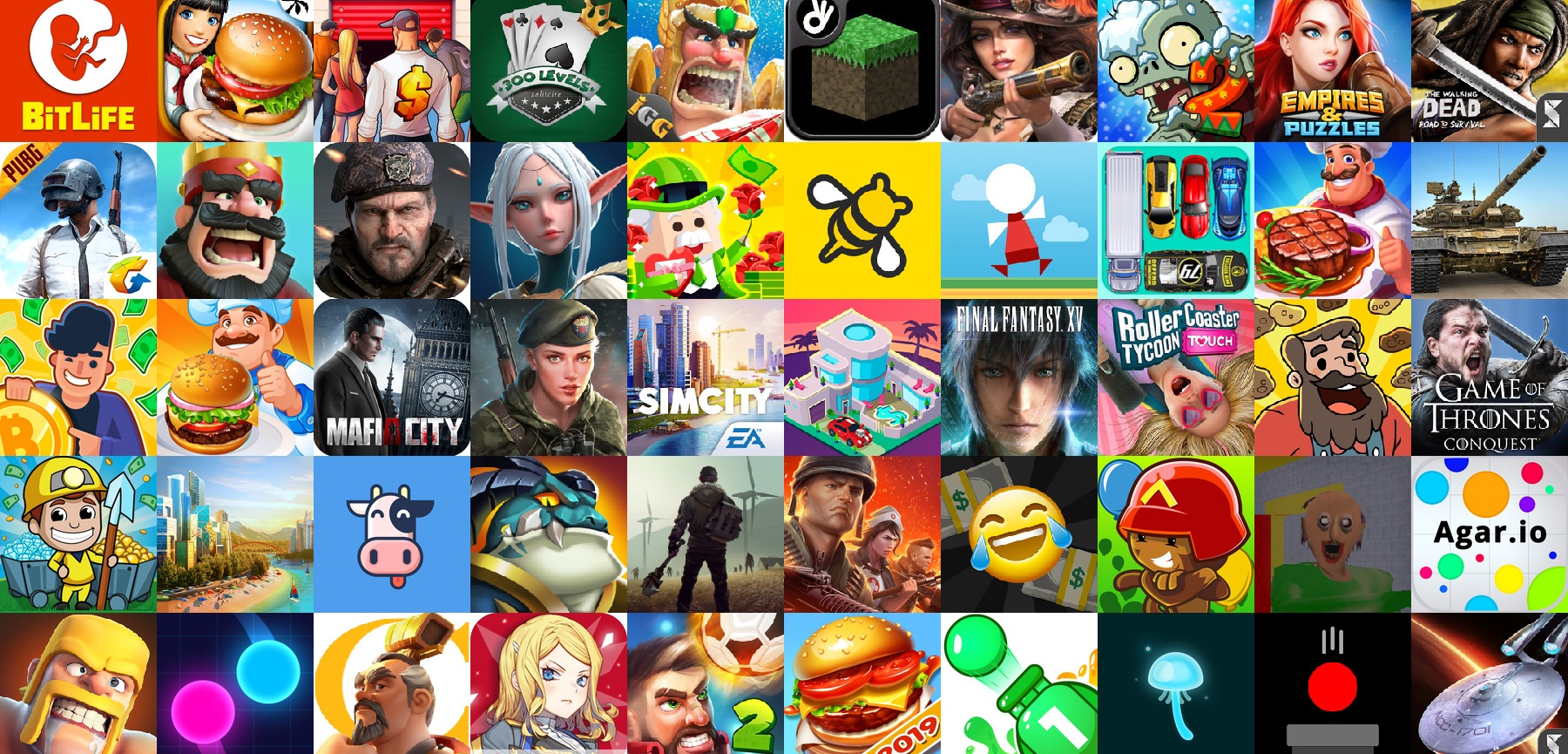
As a player ‘ s first impression of the game, a carefully optimized application icon can have a significant impact on downloads. So, what’s an efficient app design? In an interview with Michael Flarup, a PixelResort designer and author of the Handbook of Applications of Icons, stated that basic design principles to attract eyeballs remained unchanged.
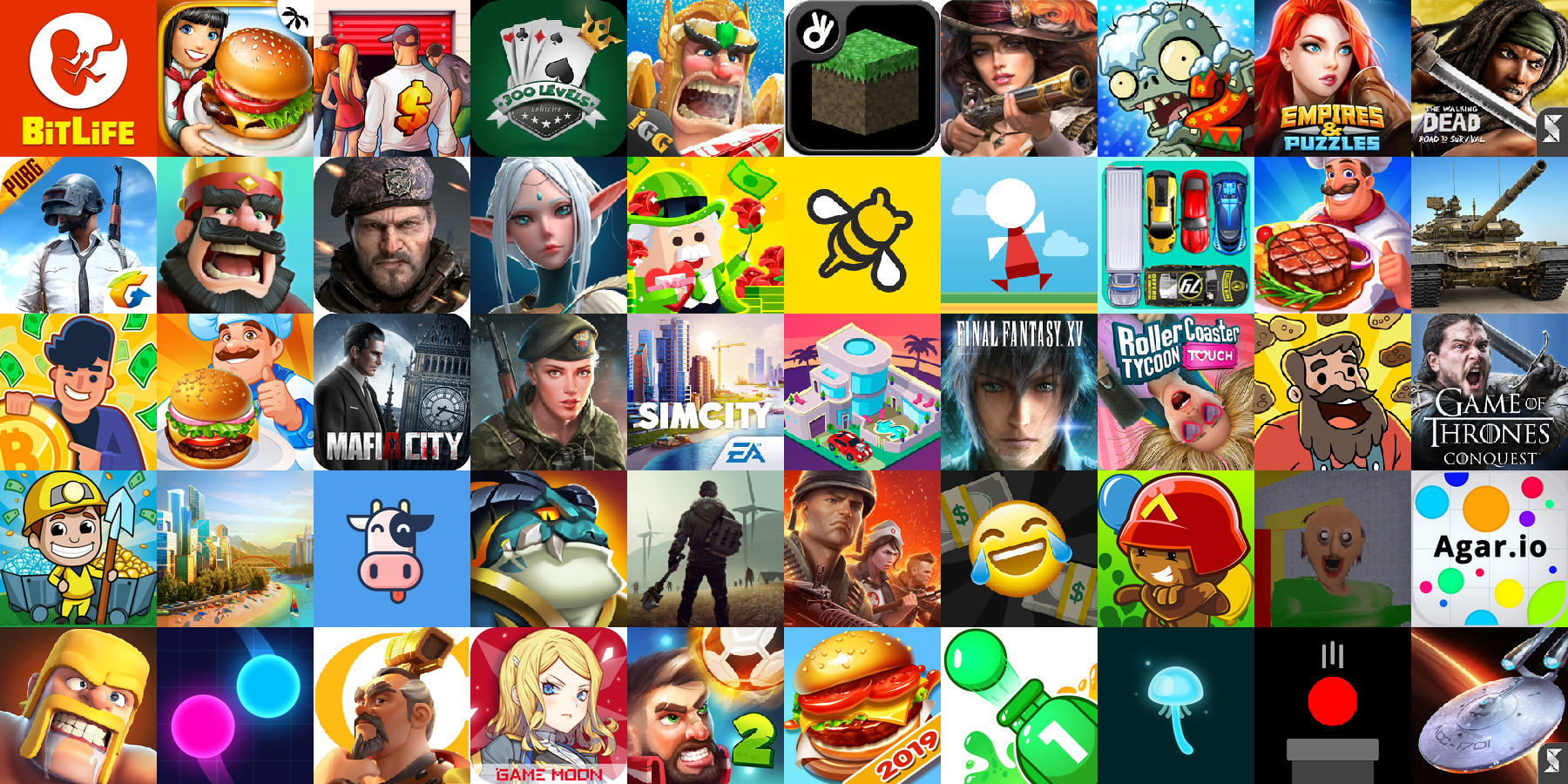
“Tide style comes and goes, but its core mission remains the same: to create practical works of art that are both identifiable and scalable”, he explained, “conceptual clarity and unique contours remain essential. The classics that make you happy often resonate with both design and emotion.” In addition to recognition, Roberto Sbrolla of AppAgent, the mobile growth agency, proposes three design principles for the application of the icon: type recognition, uniqueness and consistency. He pointed out that “the icon should deliver the core of the game in an instant, and Google studies show that when the new game is of the type most often played by players, downloading is the strongest. If the player can visualize the type of game through the icon, the transformation effects will increase significantly. AppAgent says that it can clearly be seen from the “Travel Town” icon, that the “Royal War” has the PVP character, and that “Bus Jam” describes its game by color matching and traffic management elements.

Roberto Sbrora stressed that the second principle is unique: “Your icon needs to emerge from the competition. Is that a big deal? For example, text-like icons are mostly the same. Or is there an independent brand that invests a large number of users in the visualization of budget construction?” The third key element is coherence. “The icon sets the user’s expectations,” he continues to state that “it is essential to maintain uniformity throughout the recipient funnel. The icon is the first element that the user sees in the store, and visual consistency will significantly increase the conversion rate from browse to installation. “The design space is limited and all experts agreed that overloading of information should be avoided. Michael Frarup suggested: “Don’t try to explain the whole game, avoiding fine lines, low contrasts, and complex metaphors that require long talk to understand. Most importantly: Do not treat the icon as an afterthought. Any unthought-out, executive icon is a waste of core visual assets.”
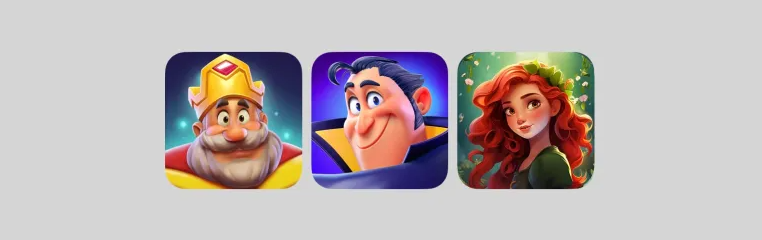
Alex Rublev, founder of the art outsourcing company RocketBrush, added: “Excessive detail can cause visual confusion and difficult to identify in small sizes. The text on the icon is difficult to read and takes up valuable space. There is also a need to be wary of the problem of mismatch between icon style and target audience — the icon needs to speak to the right audience.” Michael Frarup shared the best practices of the initial conceptual phase: “The first is to draw a large number of conceptual sketches and then to convert the best programmes into pixels and to optimize them. Focus on individual core ideas rather than stacking five ideas. The construction is a strong contour that can be clearly identified in 32 pixel sizes and remains amazing in 1024 pixels. This needs to be tested in complex wallpapers, dark environments and actual platform masks to ensure that icons and game interfaces, screenshots, and visuals are kept in uniform.” However, Alex Rublev advocated a differentiated approach, arguing that instead of being fully committed to a design, it would be better to create a different set of icons that would make more efficient use of time.
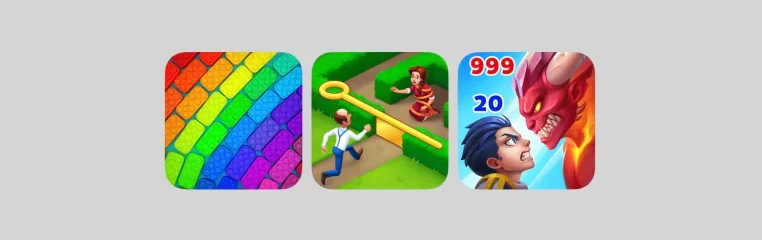
“No excessive investment should be made in a single `perfect’ icon — a common error zone. It is more effective to create multiple variants for testing. It is difficult to predict which icons perform best, and the winner is often an early, unexpected or even strange version. The winning book can always be refined later. The key is an iterative one: creating diversity, real user testing, data orientation and continuous optimization. This is far more efficient than a single icon that may not resonate after weeks of grinding.” Roberto Sbrora concludes by saying: “Strategicly, a combination of type perceptions, uniqueness and consistency. You need to support the icons that users get, so you don’t want to improvise. Top-level game icons need to be tested to continuously reach or exceed industry conversion rate thresholds and are unforgettable.”